About
Dr Justine Philip
Printmaker & Environmental Historian
PhD Ecosystem Management, MSc Animal Science, BSc Scientific Photography
Honorary Research Fellow, School of History & Cultures, University of Birmingham UK

Justine Philip, Bendigo 2026
Dr Justine Philip is an independent environmental historian and printmaker based in Bendigo and Melbourne, Australia. She is available for freelance work in research and design. Her fields of interest include agricultural history, animal ethics, Traditional Ecological Knowledge (TEK), and Australian history.
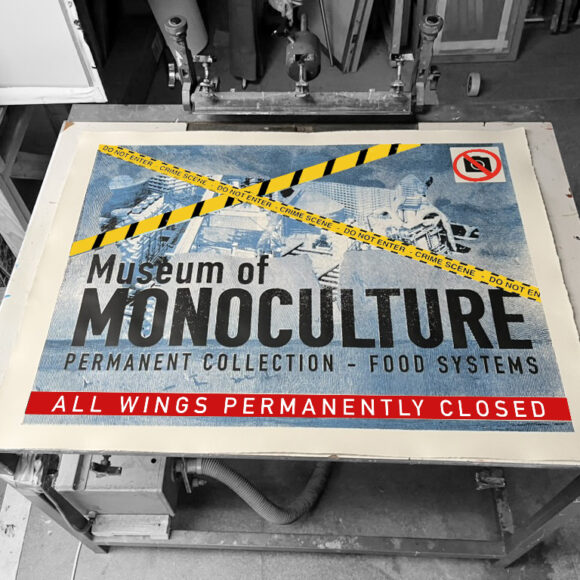
Justine’s current project Museum of Monoculture, explores ways to visualise our industrial food production systems and their environmental impact.
BIOGRAPHY
Justine was born in Matamata, New Zealand in 1963 on the traditional land of the Ngāti Hauā. She grew up following the footsteps of her two older brothers, between urban life on the northern slopes of Auckland and their grandfather’s soldier settlement farm. on the land of the Taranaki Iwi, Opunake. At 16 Justine started an arts degree at the University of Auckland but left after 18 months, spending the next decade living between Sydney Australia, and Auckland, building a career as a largely self-taught musician/artist.
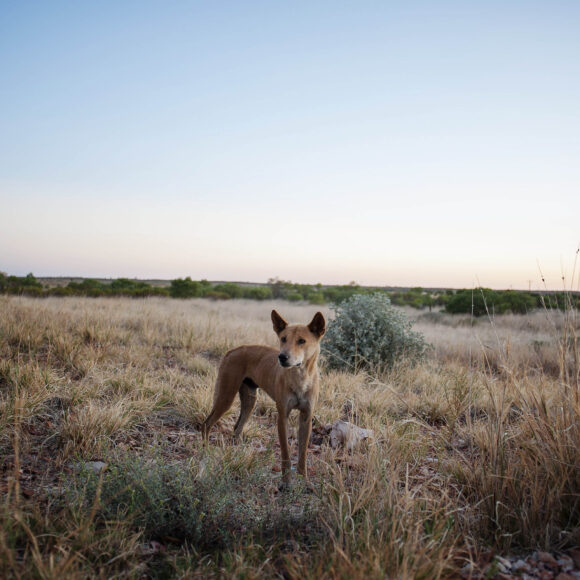
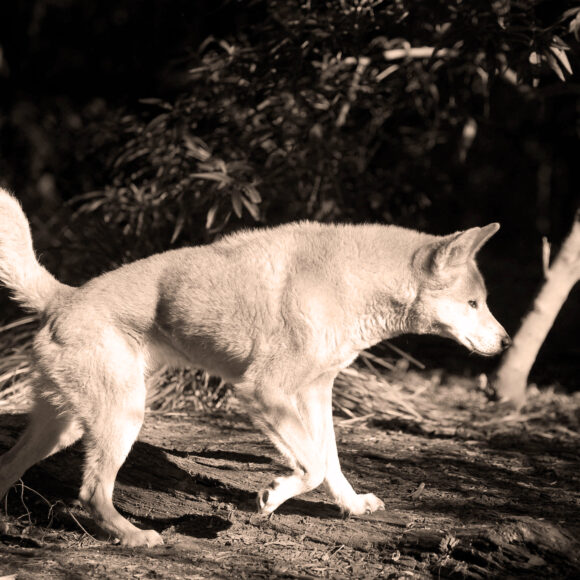
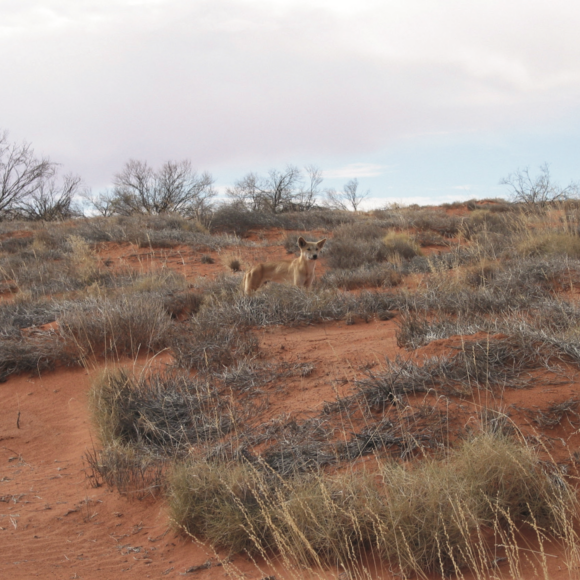
Having three children in the late 1990s brought a deep appreciation for the benefits of formal education! Not only was it helpful (if not essential) to have a degree to secure rewarding employment, but it is difficult to have a voice on environmental and policy issues without one. This change of heart was largely inspired by the adoption of two dingo pups in 2003, who at the time were listed as both a threatened species on the IUCN red list, and as vermin by most local and state governments. Dingo populations were targeted for eradication across Australia (incidentally, this is still largely the case but there is a strong movement towards their protection). At 42, Justine backtracked to university, and over the next 12 years thrived, completing three degrees in the sciences while raising three budding scholars, and managing to negotiate living space around two unruly but very endearing dingoes.
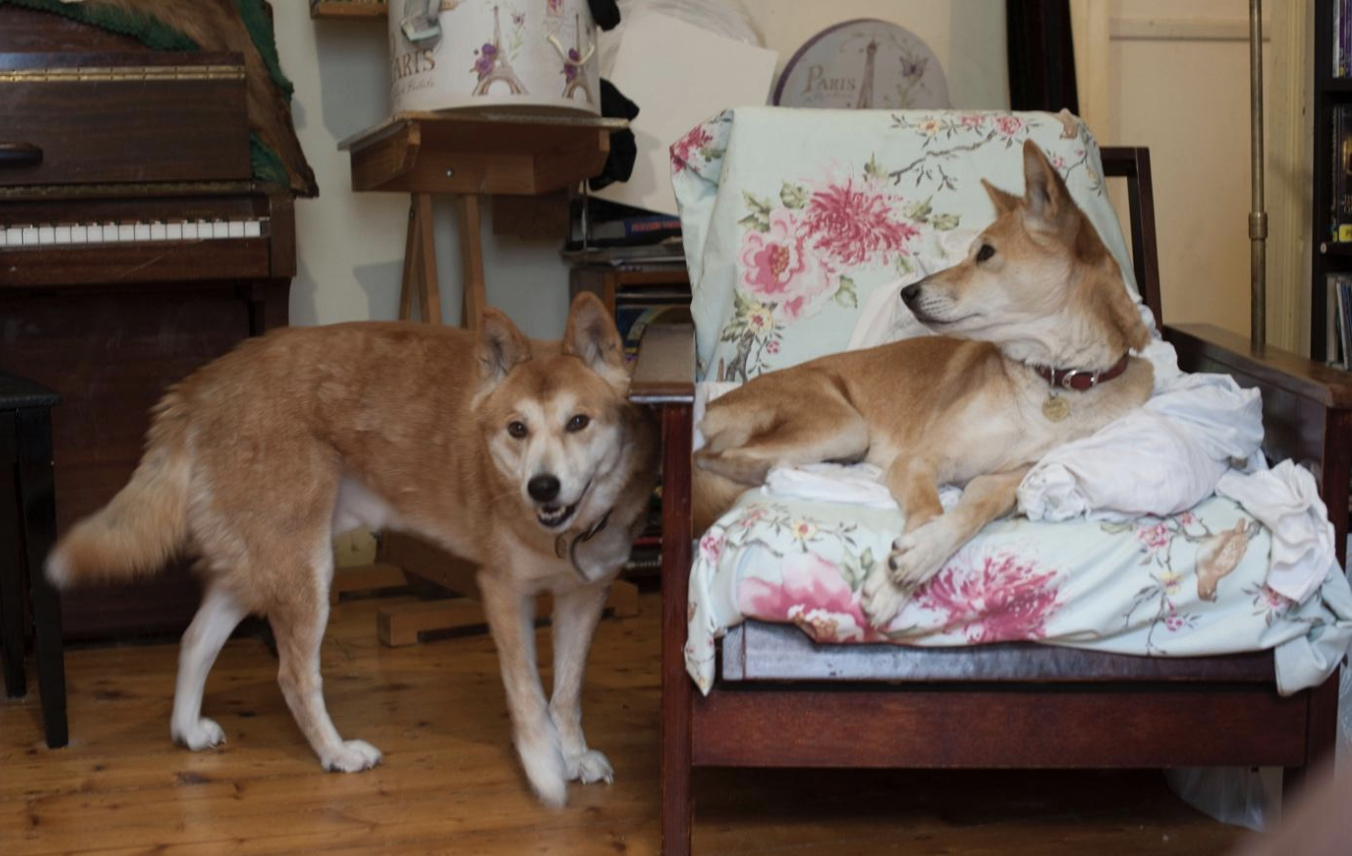
Frieda and Diego (2003/2004 to 2018), pure dingoes. Footscray, Melbourne, March 2013. PHOTO: J Philip
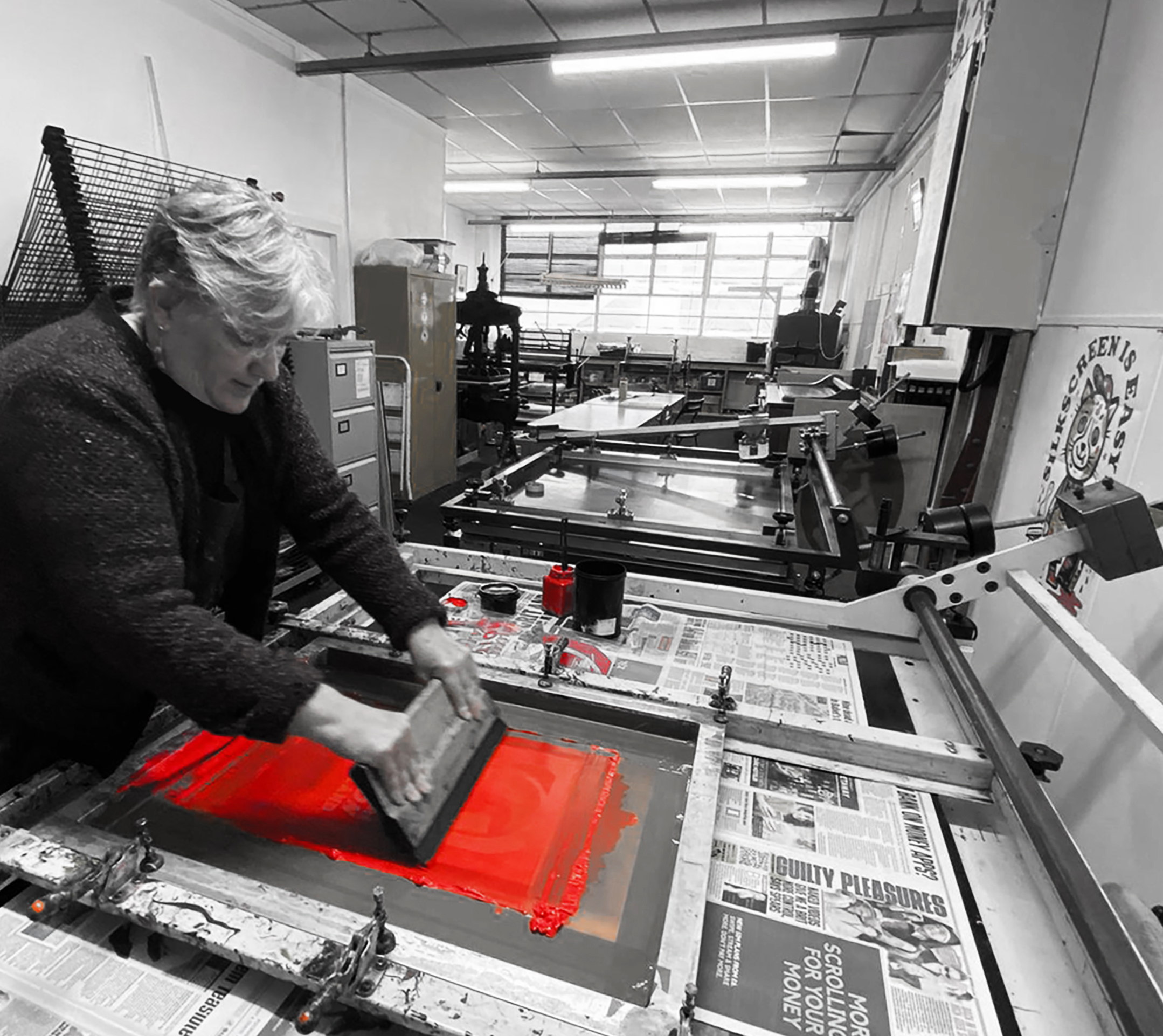
Justine Philip, Birmingham Print Makers PHOTO: Mark Wilkinson 2023
Her first degree was a BSC in Physics – Scientific Photography (RMIT), which led to four years working as a museum photographer for Museums Victoria, a position she describes as definitely the best job in the world. She completed an MSc in Animal Science at the same time and then enrolled to do her PhD in ecosystem management with the agricultural University of New England (NSW Australia). The thesis, Representing the Dingo. An Examination of Dingo–Human Encounters in Australian Cultural and Environmental Heritage, aimed to address the misrepresentation of the dingo in cultural and ecological narrative in Australia, and to recognise their status as a Cultural Keystone Species. The thesis is reprinted in full on this website. It was short listed for the Serle award for the best thesis in Australian History and awarded the Chancellors Doctoral Research Medal 2017.
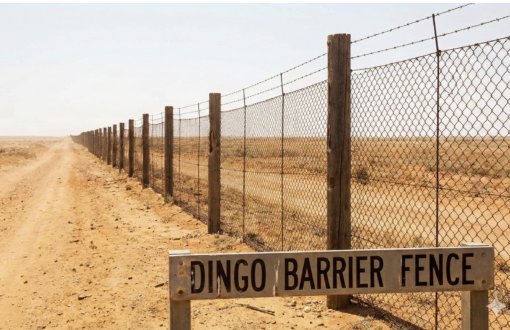
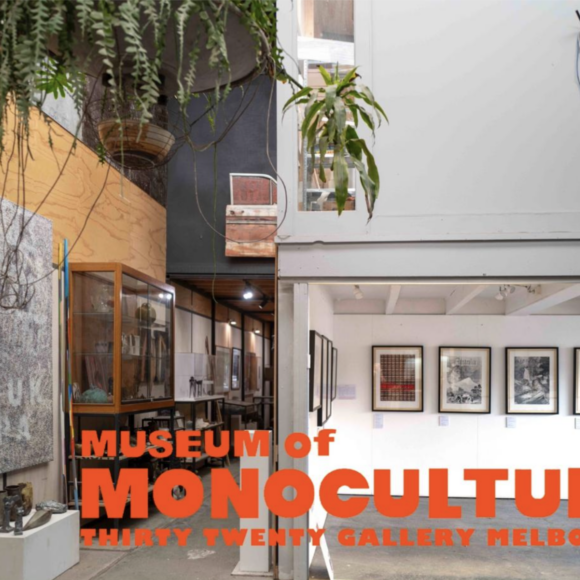
Since gaining her PhD Justine has worked as a historian for the Wurundjeri in Melbourne, and lived for three years in a Moulin (mill house) in Côtes-d’Armor, France, while working on a long paper discussing the merits of dismantling Australia’s infamous Dingo Fence. Her Postdoc on MaMoGH The Making of Monoculture. A Global History at the University of Birmingham in the UK brought her back to the arts, and she returned home in July 2024 to be with family in Australia. Justine lives in Bendigo in central Victoria, where she has worked as Gatjin water manager for the Dja Dja Wurrung, and is now an independent fulltime writer/printmaker. In October 2025 she launched the travelling exhibition Museum of Monoculture, building a visual archive of images exploring our problematic agricultural and environmental history.
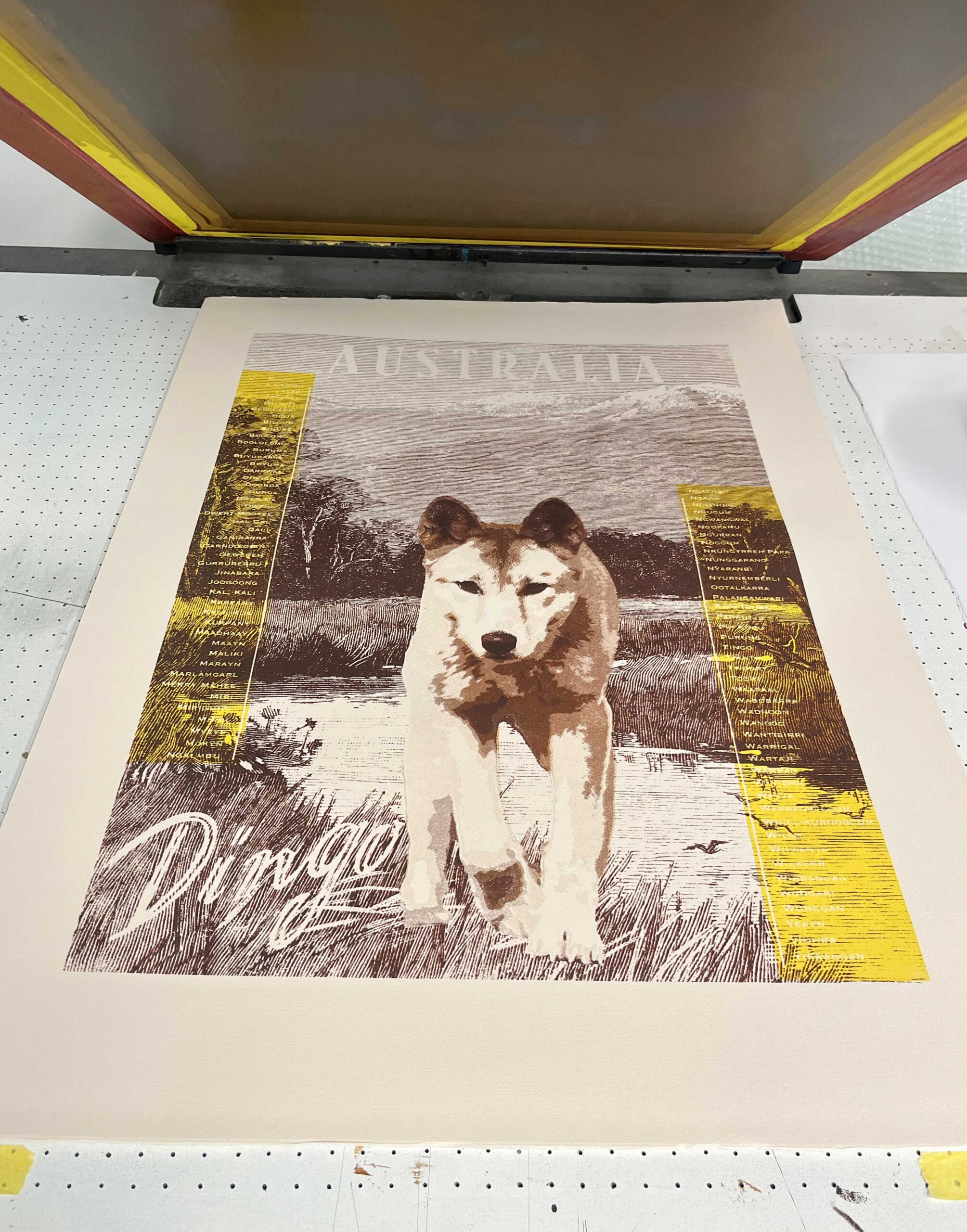
Dingo screen in process PHOTO: Justine Philip 2025
FEATURE WRITER AUSTRALIAN GEOGRAPHIC
Cover story May 2022 THE DOG FENCE
SHORTLISTED 2017-2018: Serle Award
for best thesis in Australian history
CHANCELLOR’S DOCTORAL RESEARCH MEDAL 2017
University of New England, NSW AUSTRALIA
AUSTRALIAN POST GRADUATE AWARD
Australian Government 2014 – 2017
UNIVERSITY OF NEW ENGLAND TRAVEL GRANT
For archival research in London, Europe, Moscow and Washington 2014 – 2016
GRADUATE WOMEN VICTORIA
Encouragement Award to present at the International Minding Animals Conference, Utrecht 2012
COMMONWEALTH LEARNING SCHOLARSHIP BSc
RMIT University, 2006-2009
GEORGE ALEXANDER FOUNDATION GRANT
2007
DELL COMPUTER GRANT
2007
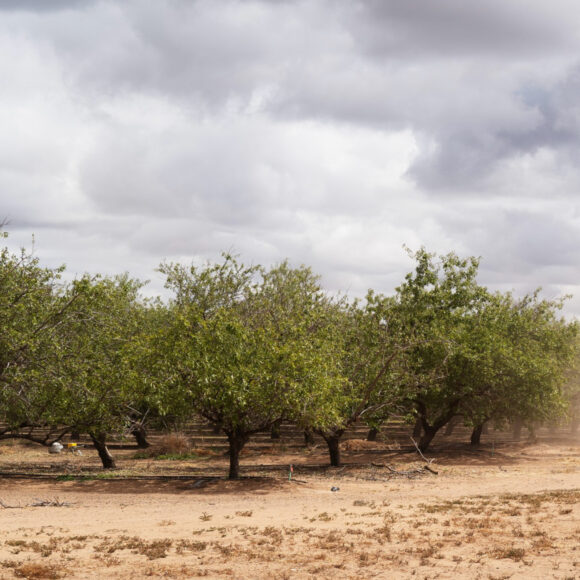
Monoculture: The Rise (and Fall) of Almond Orchards in the Irrigated Desert Regions of California and the Australian Mallee
Integrated Histories Workshop, Centre for the History of Global Development, Shanghai, China — 4–5 November 2023 (remote)
“Global California Almonds” Presentation
Monoculture Meets Crop Diversity Workshop,
Department of History and Philosophy of Science, University of Cambridge, UK — 18 May 2023
When Conservation Turns Violent: Examining New Zealand’s Use of Toxins in Defence of the Environment
The People’s Inquiry (Te Uiinga a Ngā Tāngata), New Zealand — 4 September 2021
Killing for Conservation: A Historical Review of Vertebrate Pest Control in Australia and New Zealand, 1814–2018
Centre for the History of Global Development, Shanghai University — 18 October 2018
The Australian Dingo: A Curious History of Culture and Conflict
Zoological Series Seminar, Smithsonian National Museum of Natural History, Washington DC — 5 November 2014
Imagined Futures
Panel with Debbie Symones (visual arts), Evelyn Tsitas (science fiction), and Justine Philip (scientific photography)
Association for the Study of Literature, Environment and Culture – Australia and New Zealand (ASLEC-ANZ),
Australian National University — 19–21 June 2014
Traversing the Barrier Fence: Exploring the Cultural Life and Afterlife of the Australian Dingo
Presentation to postgraduate canine science students,
Department of Ethology, Eötvös Loránd University, Budapest, Hungary — 17 March 2014
Short-term Research Fellow
Centre for the History of Global Development, Shanghai University, China
20 September – 20 November 2018
Inaugural Writer-in-Residence
Bush Retreats for Eco Writers, BREA(W) Network, Australia
20–31 September 2015
Short-term Research Associate
Institutional History Division, Smithsonian Institution Archives, Washington DC
3 November – 14 December 2014
Short-term Attachment
Department of Ethology, Eötvös Loránd University, Budapest, Hungary
13–25 March 2014