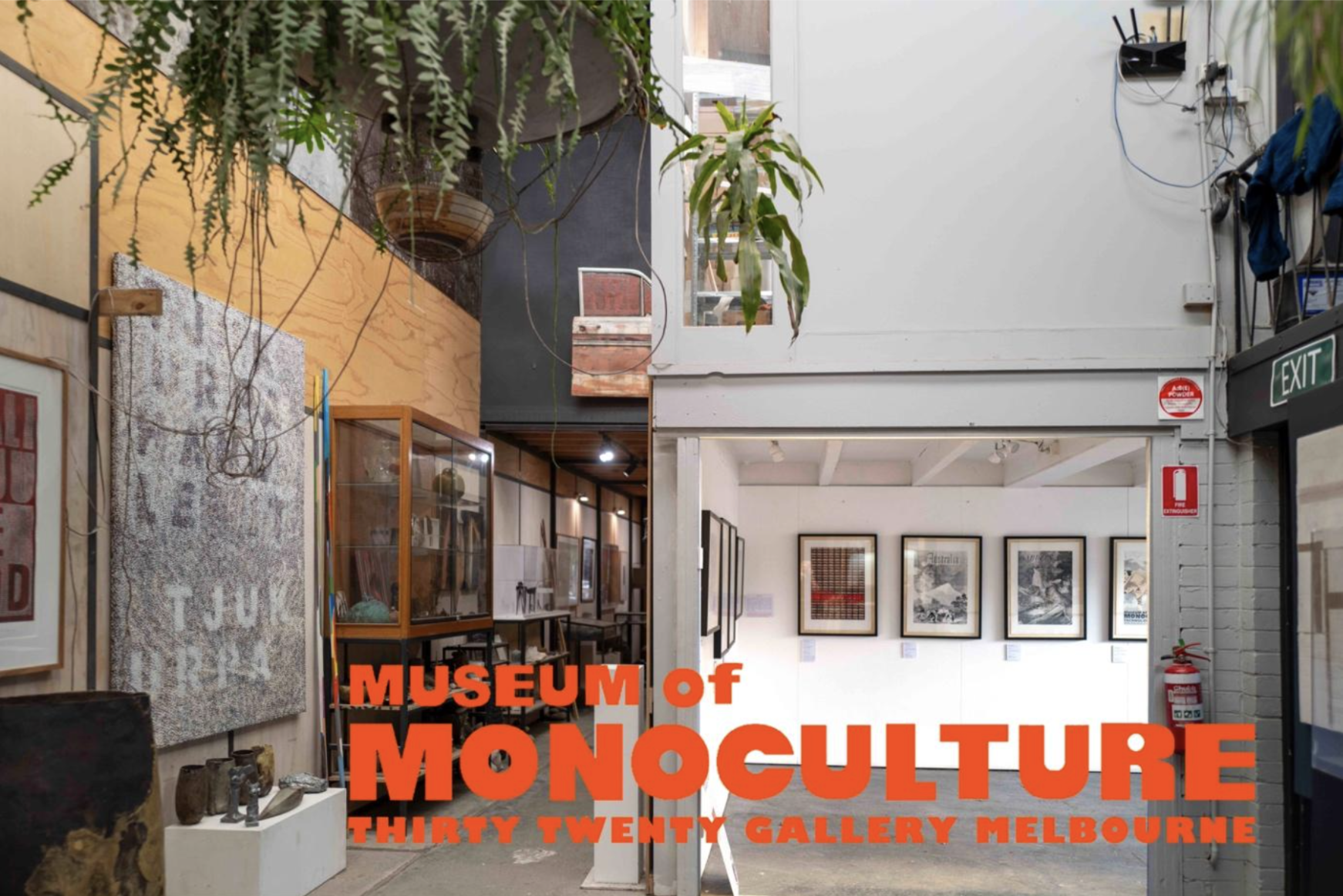
Museum of Monoculture
Thanks to the directors of Sunshine Print Artspace and Fundere Foundry in Melbourne, the exhibition Museum of Monoculture is open for another month at Thirty Twenty Gallery, through to 20 February 2026.
The exhibition features 14 screen prints from series inspired by my research on the ERC funded project MaMoGH – The Making of Monoculture. A Global History, in Birmingham UK 2024. MaMoGH documents the global drift towards monocultural food production post Word War II, and exposes the lack of visual records in the archives bearing witness to this hazardous and troubling history.
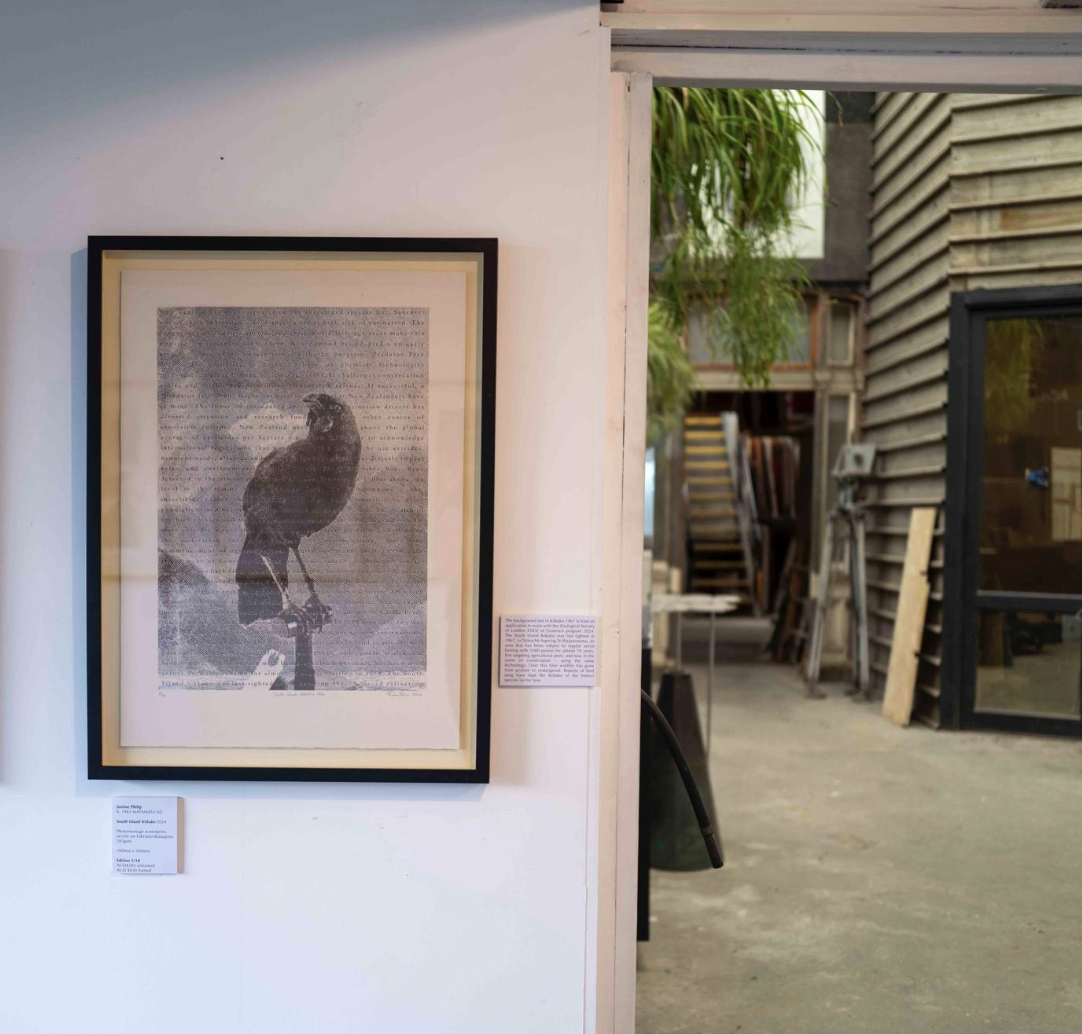 Above: “South Island Kõkako 1967” 2024. Screen print by Justine Philip Acrylic on Fabriano Rosaspina 50cm x 70cm. Thirty Twenty Gallery 2026. PHOTO J Philip
Monocultural food production generally involves the production of a single crop over vast areas of land, or the production of a single vertebrate species within the smallest space possible. They are hugely productive systems, but they are also extinction drivers.
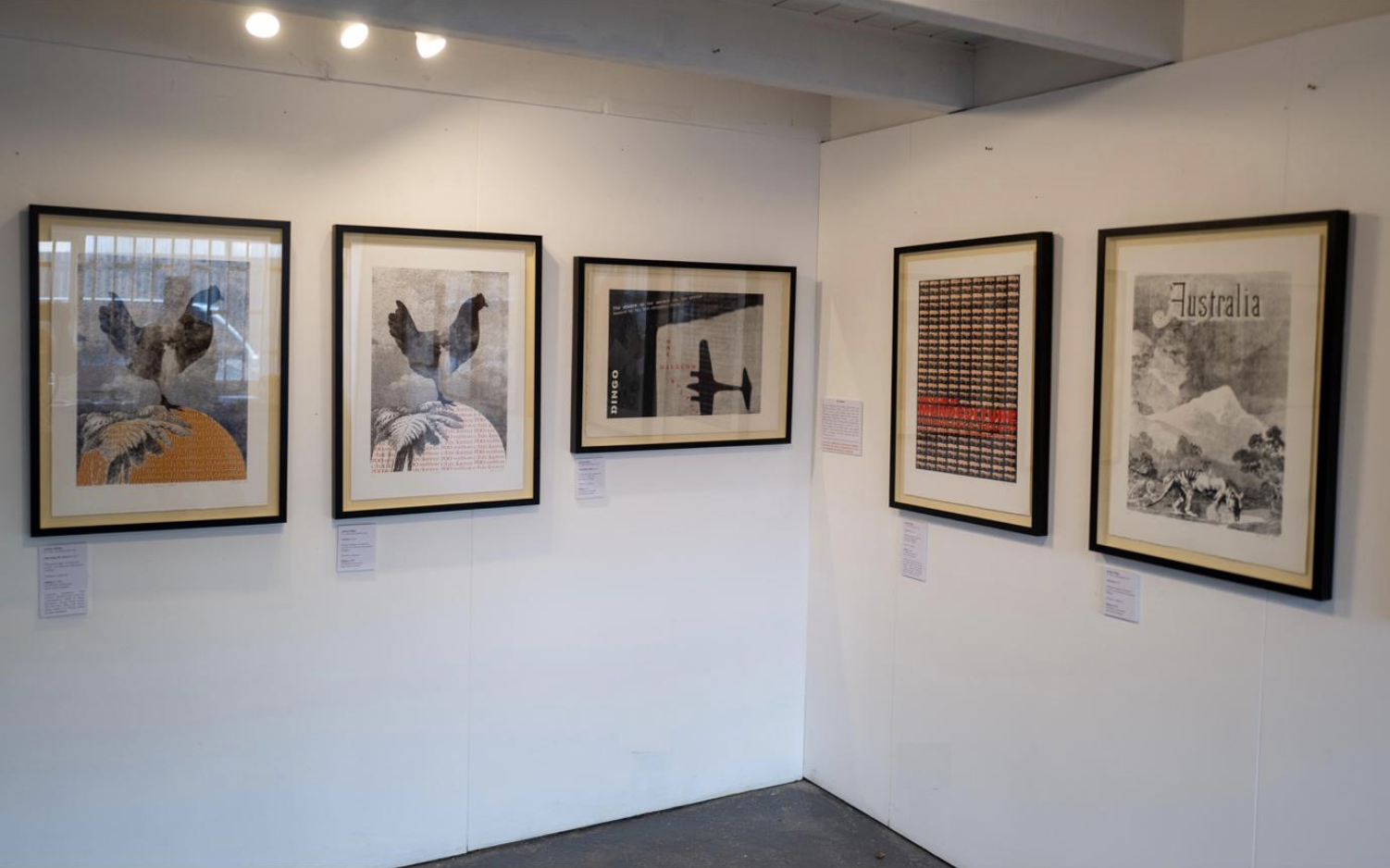 Above: Museum of Monoculture, Thirty Twenty Gallery 2026 PHOTO J Philip
The screen prints look to ways of visualising the excesses of modern industrial food production, without alienating the viewer from the innate violence and vampiric tendencies of the system. How do we imagine 700 million chickens, the number that Australia processes each year for local consumption? Or picture the 26-story high pig factory in Ezhou China, currently the world’s largest CAFO (Concentrated Animal Feeding Operation). Other themes include documenting vertebrate pest control technologies employed to eradicate sanctioned animals, those deemed waste products of industrial agriculture. This sanctioning of a species is a theme I will explore further in my next post. The artworks aim to question why, as a society, we are unable to control such dangerous and ethically unconscionable technology.
Thirty Twenty Gallery and SUNSHINE PRINT ARTSPACE is celebrating its ten-year anniversary this year. Founded by multi-disciplinary artists Phillip Doggett-Williams and Adrian Spurr, the studios sit within an unassuming industrial corner of Sunshine in West Melbourne – between the panel beaters, storehouses and factories. It is a remarkable meeting place of metal and art, and a rare opportunity to visit a 21st century analogue wonderland. The shared space includes Fundere Fine Arts Foundry established by Cameron McIndoe in 1995, producing some of Australia’s finest, large-scale bronze sculptures.
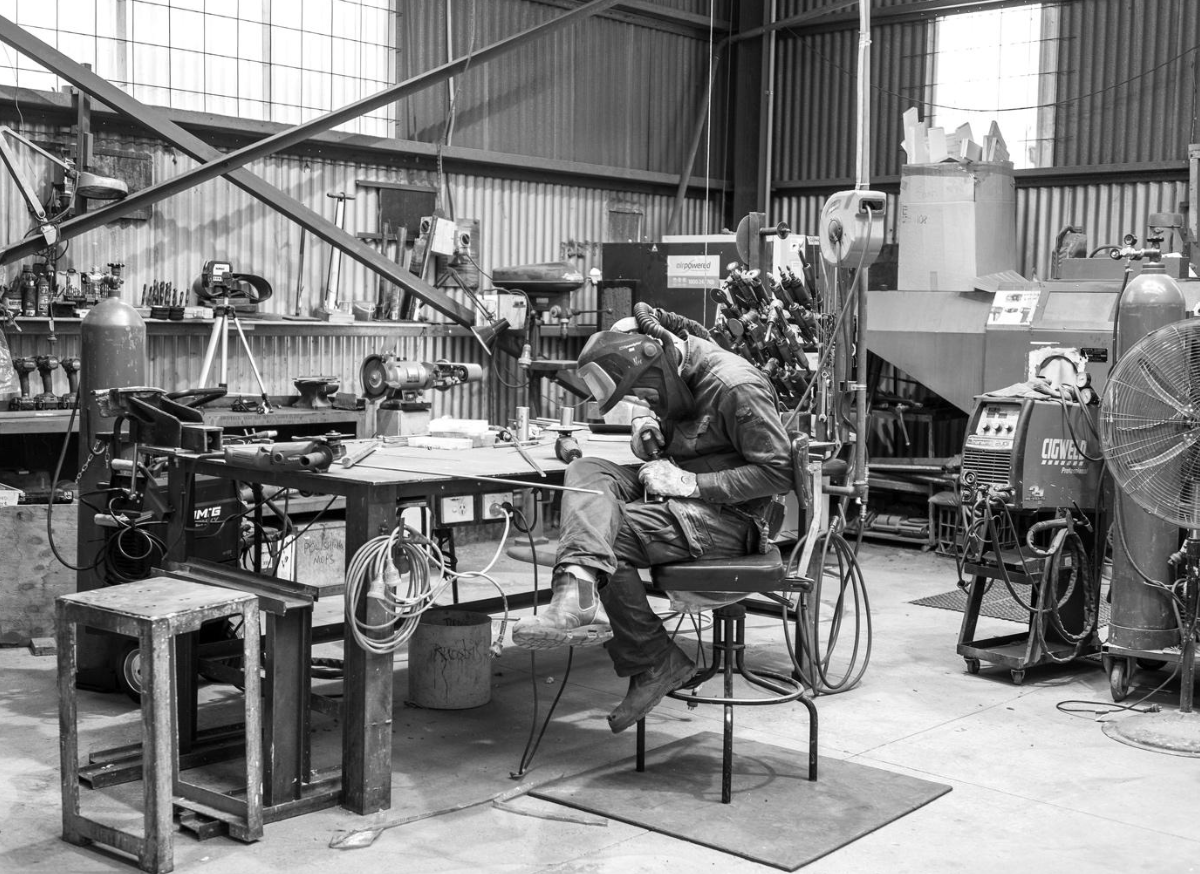 Above: Sculpture artist Sam Blomley at work in the foundry, summer 2025-26
Works of the resident artists and prominent Indigenous artists are on display in the common areas including the incredible canvas and metal works of Robert Fielding.
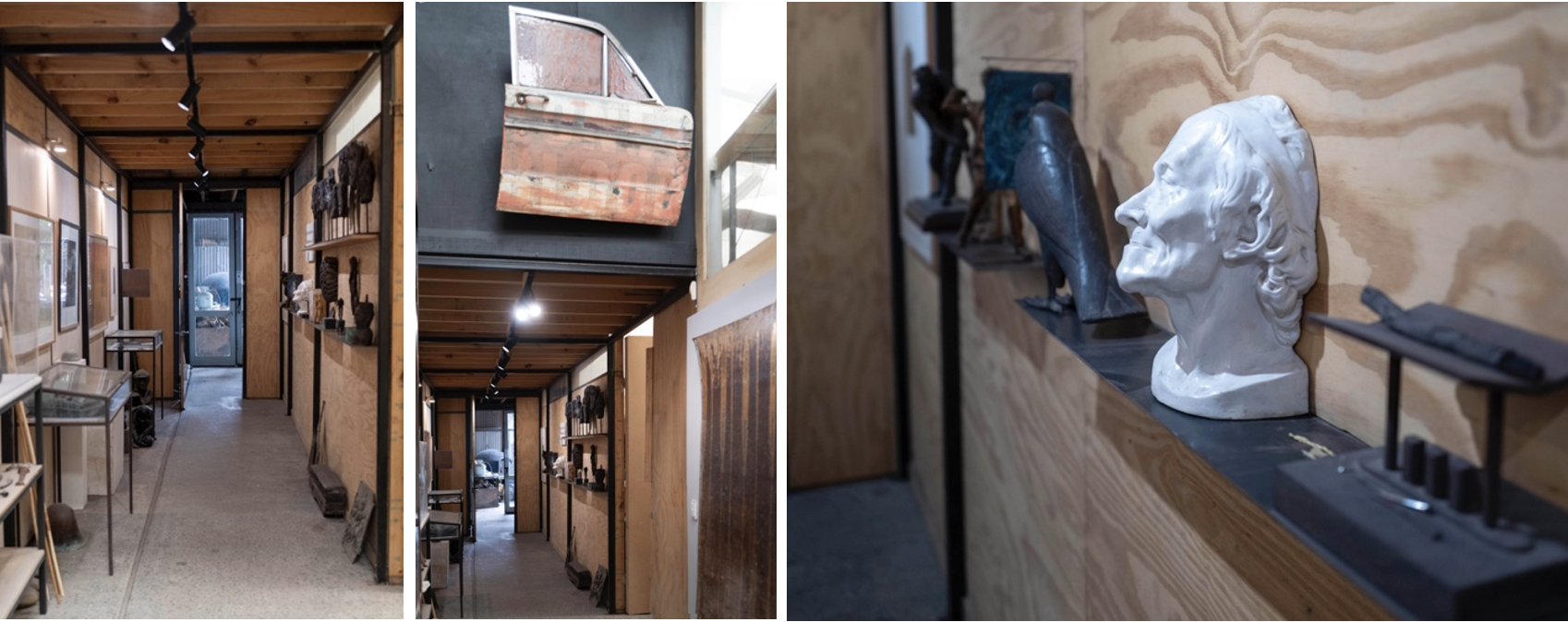
Above: Hallways through the collective art space in Sunshine. PHOTO J. Philip
Printmaking collectives have been popular since the early 20th century, preserving the techniques and technology of manual and fine art printmaking. The equipment is often extremely heavy and difficult to accommodate –printing presses, large dark room exposure units, vacuum tables etc. Analogue printmaking remains a powerful tool in protest and social movements, and this communal gathering of equipment and expertise encourages a strong cross over between street art and the museum gallery. Sunshine Print Artspace has fostered the work of many prominent printmakers in both fields, including Wemba Wemba and Wergaia artist, Kelly Koumalatsos, who made her formative possum skin prints on the large studio press – part of a series that is now on exhibition as an extraordinary artwork on 40 tonnes of moving metal, travelling the streets of Melbourne adorning a tram this summer.
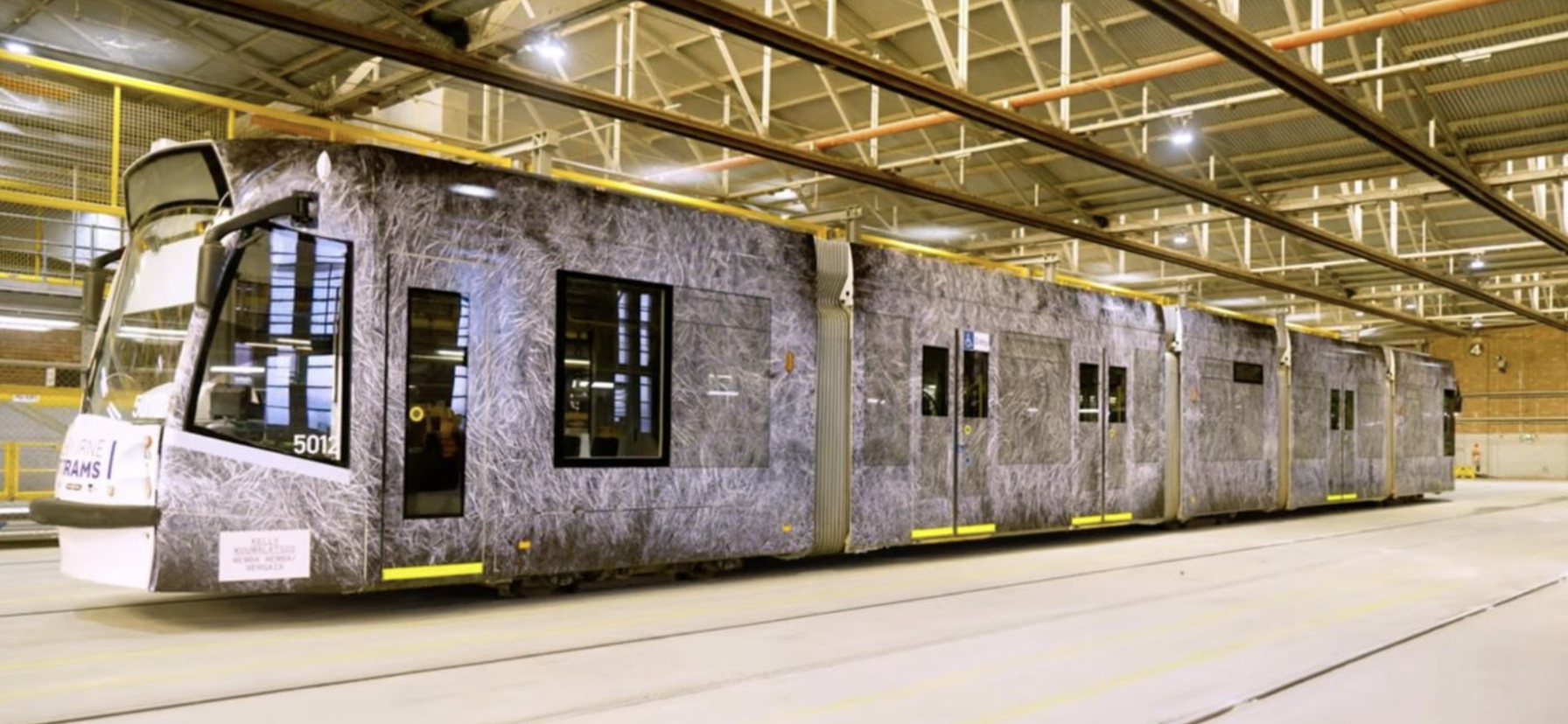 Above: Kelly Koumalatsos’ (Wemba Wemba and Wergaia) artwork ‘Bulkburrannyuawan – Soft Sunrise – Wergaia’. Melbourne Trams 2025.
Thirty Twenty Gallery in the Sunshine Print Artspace and Fundere Foundry, 29 Western Ave, Sunshine VIC 3020, is open Monday to Friday 11am to 3pm or by appointment, contact: website@justinephilip.com