Monoculture (noun): The cultivation or exploitation of a single crop,
or the maintenance of a single kind of animal, to the exclusion of others.
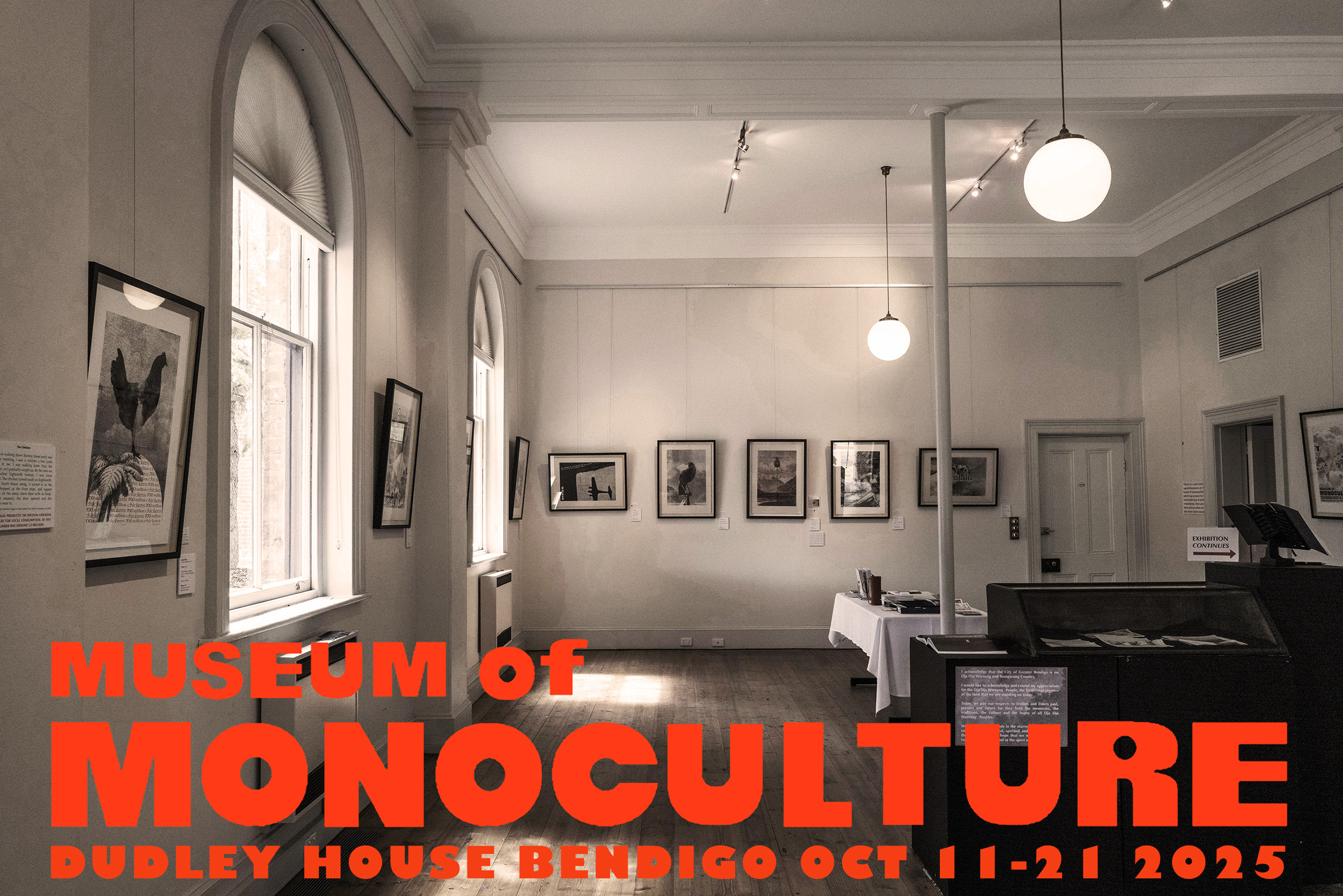
This exhibition explores how monoculture, as a defining cultural system, is shaping our economy, landscapes, and ecology. It features 24 original screenprints by Bendigo-based agricultural historian and printmaker, Justine Philip.
The series was inspired during Philip’s work on the European Research Council (ERC) project The Making of Monoculture. A Global History (MaMoGH). Industrial agriculture once enjoyed a productive partnership with the visual arts well into the mid-20th century. Museums of Industry and Technology flourished, and artists were encouraged to record technological advances alongside images that celebrated the rural landscape and agricultural labour. Since the late 1940s, however, the hyper-productivity of modern food and fibre production has largely disappeared from public view.
Frank Uekötter’s essay A View to a Kill examines the drivers behind this shift, while Roland Breckwoldt explores ancient traditions of representing animals as a way of revealing humanity’s changing relationship with the natural world.
Monoculture’s disregard for the biophysical limits of land, water, labour, and economics has profoundly shaped the lives of millions of animals in Australia and New Zealand. Rare and endangered wildlife, free-living animals labelled as pest species, and livestock are all entrapped within the system. The alarming pivot towards employing agrochemical technologies as frontline conservation tools-used to kill unwanted wildlife under the guise of protecting the rarest species—is arguably unconscionable.
Philip’s works confront this reality through photomontage screenprints on paper (500mm x 700mm). Drawing inspiration from the protest poster and the 1920s designs of the British Empire Marketing Board, these images reveal how agricultural landscapes have been reframed, and how animal life has been rendered increasingly fragile within them.